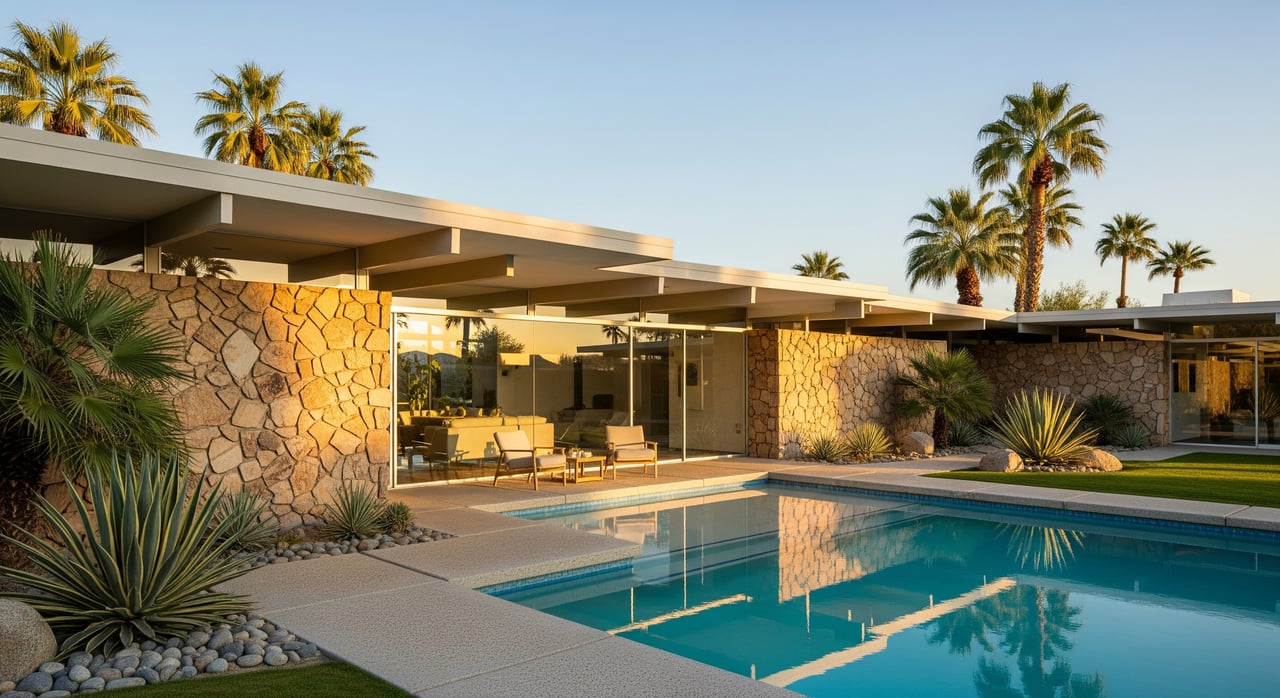
Love the look of Palm Desert’s clean lines, glass walls, and breezy courtyards, but not sure how to tell the real mid-century features from later add-ons? You are not alone. Many Coachella Valley homes blend original Desert Modern details with decades of updates. In this guide, you will learn how to spot hallmark features, what to check during tours and inspections, and how to plan updates that keep the character intact. Let’s dive in.
Desert Modern in Palm Desert
Mid-century modern in the Coachella Valley, often called Desert Modernism, grew between the 1940s and 1970s. In Palm Desert you see clean lines, long roof planes, and indoor-outdoor living tailored to the hot, arid climate. Homes used materials that perform in heat, like concrete, terrazzo, stucco, and masonry screens.
Designers emphasized shade, cross-ventilation, and privacy. You will often find deep overhangs, courtyards, and sliding doors that open to patios and pools. These choices are not only beautiful, they also support comfort and efficiency in the desert.
Key features to spot
Post-and-beam construction
If you see exposed vertical posts and horizontal beams, you are likely looking at post-and-beam. Inside, that structure often allows open rooms and long spans of glass. Outside, beams may extend beyond the walls to create generous rooflines.
Why it matters: post-and-beam enables open plans and strong sightlines. During tours, look for beam-to-roof joints and beam bases. Check for water staining, rot, or termite activity. Ask whether any added walls or hidden supports changed the original spans. A structural inspection by someone familiar with mid-century systems is a smart move.
Clerestory windows
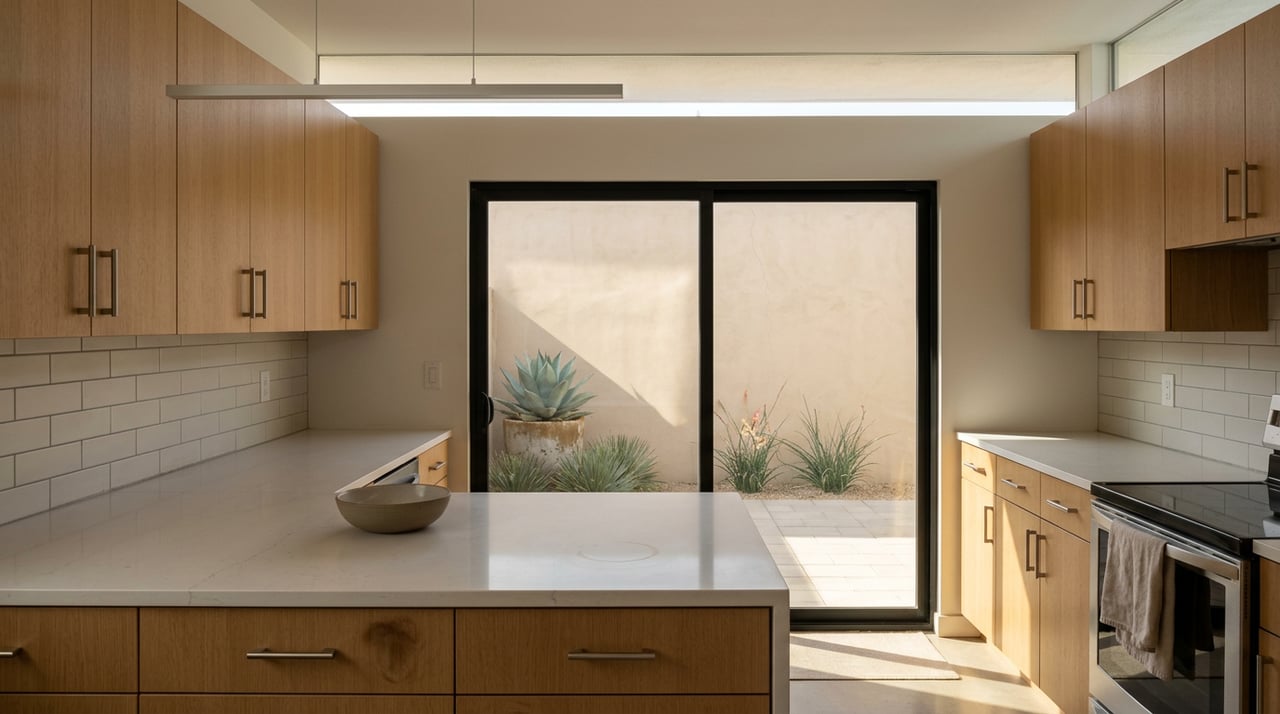
Clerestories are narrow, high bands of glass, usually under the eaves or between roof planes. They bring in daylight while preserving privacy and wall space for art or furniture.
What to check: Original single-pane glass can lose heat and may have draft issues. Look closely at frames for corrosion or deterioration and at flashing for leak marks where the roof meets the window band. If windows were replaced, ask if profiles and sightlines match the originals.
Breeze blocks
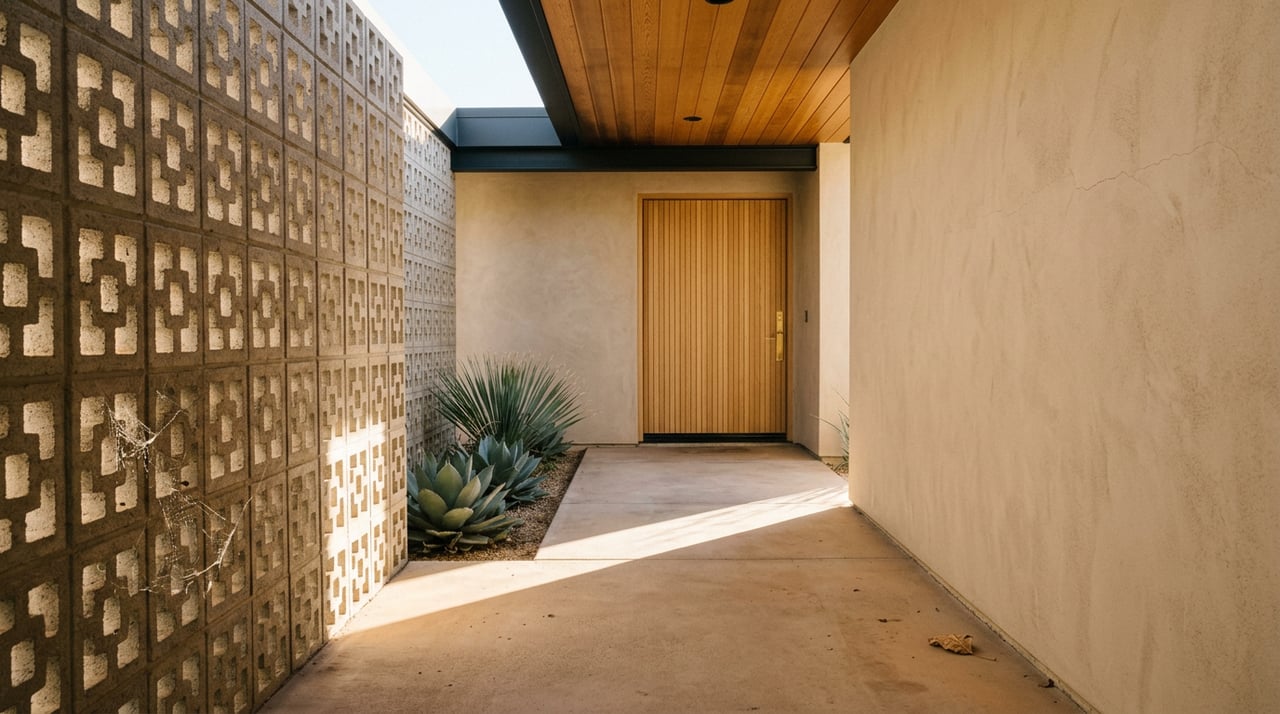
Breeze blocks are decorative concrete screens with geometric patterns. You will see them at patios, carports, fences, and privacy walls. They filter light, provide airflow, and create a strong mid-century look.
What to check: Scan for cracks, spalling, or mismatched replacements that break the visual rhythm. Mortar joints can fail over time, and irrigation overspray may cause moisture issues or efflorescence. Note original patterns and where panels may have been removed.
Original terrazzo floors
Terrazzo is a polished surface made from stone chips in a cement or resin base, often divided by thin metal strips. It shows up in entries, living areas, and sometimes patios.
What to check: Look for cracks from slab movement, chips, or dull areas. Terrazzo may also be hidden under carpet or tile, so peek at closet thresholds and vents. If present, restoring original terrazzo is often better than replacing it. Plan for a specialist to handle repairs and polishing.
Other telltale details
- Flat or low-slope roofs with wide overhangs. Some higher-end homes feature butterfly or folded plate roofs.
- Floor-to-ceiling sliders and large glazed walls that frame courtyards or pools.
- Carports, built-in planters, and custom cabinetry that integrate into the plan.
- Courtyards and inward-facing layouts that balance privacy with light.
- Minimal ornamentation, natural materials like wood, stone, and concrete, and long horizontal lines.
- Simple, linear kitchens and baths with integrated storage and period fixtures.
- Native or low-water landscaping suited to the desert, with pools as common anchors.
How to evaluate a listing
Quick visual checklist
Use this when scanning photos and walking tours:
- Exterior
- Exposed post-and-beam elements. Note material and condition.
- Breeze block screens with matching pattern and intact joints.
- Roof type and condition. Look for ponding or uneven lines on flat roofs.
- Large glass spans or clerestories. Do frames and muntins look consistent, or do replacements stand out?
- Built-in landscape features such as planters, fire pits, and pool orientation.
- Interior
- Polished terrazzo or clues it is hidden under later flooring.
- Clear sightlines and open rooms that suggest post-and-beam.
- Original built-ins, period hardware, and light fixtures.
- Condition of exposed wood beams and ceilings.
Smart questions to ask
- Which elements are original and which were remodeled, including windows, doors, roof, and finishes?
- Are there original drawings, plans, or known architect and builder names?
- Were structural changes or additions permitted? Ask for permits and final approvals.
- Any known water intrusion, termite activity, or foundation issues? Request reports.
- When was the roof last replaced, and with what materials? How were flashings at clerestories and beam connections handled?
- Is terrazzo present under carpet or tile? Any documentation of restoration?
- Are there historic designation or HOA rules that affect exterior changes?
Inspection priorities
A targeted due diligence plan protects both character and value:
- Structural review by a professional experienced with post-and-beam.
- Roofing inspection focused on low-slope assemblies and flashings.
- Termite and pest inspection. Desert homes still require checks.
- Moisture assessment at roof penetrations, clerestories, and slab edges.
- Window and glazing review for condition, safety glazing where required, and efficiency upgrades.
- Electrical evaluation for service capacity and outdated wiring.
- Mechanical/HVAC review for sizing, duct condition, and insulation.
Red flags to weigh
- Chronic water issues or roof repairs without proper flashing at critical joints.
- Hidden or undocumented structural changes that compromise original spans.
- Removal of character-defining glass walls replaced with incompatible solid walls.
- Unpermitted additions or remodels that complicate insurance and future work.
- Loss of original terrazzo or extensive covers that signal removal of historic fabric.
Plan sensitive updates
Preserve as much original material as possible. When replacement is necessary, match scale and profiles so the overall look remains cohesive. Where you can, choose upgrades that are reversible.
Windows and glazing
- Retain original frames and sightlines if feasible. Consider retrofit insulating units in existing frames to improve comfort.
- If replacing, match frame profiles and muntin patterns, and keep proportions consistent with surrounding glass.
Roofs and waterproofing
- Repair rather than rebuild where possible. Focus on tight flashings at clerestories and beam penetrations to prevent leaks.
- Add roof insulation that improves comfort without changing the roof profile.
Terrazzo
- Expose and repair existing terrazzo instead of covering it. Professional polishing and crack repair can bring it back to life.
- Use a specialist for color and aggregate matching so repairs disappear into the field.
Breeze blocks and masonry
- Keep intact panels. If blocks are damaged beyond repair, source matching patterns or have reproductions made.
- Repair mortar to the original color and joint width. Avoid coating that hides the pattern.
Kitchens and baths
- Keep the original footprint and built-in logic when you can. Pair modern appliances and fixtures with materials and lines that respect the era.
- Reuse or replicate vintage cabinet details. Consider inserts that can be removed later.
Systems and equipment
- Upgrade HVAC, electrical, and plumbing for comfort and code, but route ducts and equipment discreetly to preserve sightlines and exposed structure.
- Place mechanical equipment in utility zones so character spaces stay clean and open.
Landscape and outdoor rooms
- Protect courtyard layouts, pool placement, and integrated planters. These elements define indoor-outdoor living.
- Favor xeriscape palettes that fit the desert setting. Avoid heavy plantings that increase water use and obscure architecture.
Work with the right pros
- Choose contractors and architects with mid-century and Desert Modern experience.
- If the property is in a historic district or has designation, review local guidance before exterior work.
Local resources and next steps
You can learn a lot from regional events and archives focused on Desert Modernism. Explore organizations that highlight Coachella Valley architecture, preservation groups, and museum resources. City and county building departments can provide permit histories for past work.
Before you write an offer, take these steps:
- Request disclosures and the permit history for major alterations.
- Ask for original plans, drawings, or architect and builder names.
- Schedule specialist inspections that fit the home’s features, including structural, roofing, pest, and terrazzo or masonry if relevant.
- If any preservation rules apply, review restrictions and potential incentives.
- Get estimates for needed preservation work so you can negotiate with clarity.
Buying a mid-century home in Palm Desert is as much about stewardship as style. With the right inspections and a preservation-minded plan, you can enjoy open, light-filled spaces that perform in the desert while keeping the character you love.
If you want help identifying authentic features, estimating sensitive updates, or coordinating contractors, reach out to the local team that blends design knowledge with turnkey execution. Connect with Darcey Deetz for guidance tailored to your search.
FAQs
What defines mid-century homes in Palm Desert?
- In Palm Desert, mid-century or Desert Modern homes emphasize clean lines, indoor-outdoor living, climate-responsive shading, and materials like concrete, terrazzo, and breeze blocks.
How can I confirm post-and-beam construction during a tour?
- Look for exposed posts and beams inside or under wide roof overhangs, open rooms with few interior walls, and long spans of glass that suggest fewer load-bearing partitions.
Are clerestory windows energy efficient in older homes?
- Original single-pane clerestories often are not; consider retrofit glazing or replacements that match original profiles to improve performance without changing sightlines.
Is original terrazzo worth restoring instead of replacing?
- Yes. Terrazzo is durable and character-defining, and professional polishing and repairs can often restore it more cost-effectively than installing new premium flooring.
What inspections are most important for flat-roof mid-century houses?
- A roofing inspection focused on low-slope systems and flashings, plus a structural review of beam connections and a moisture assessment around clerestories and penetrations.
Which updates risk hurting a Desert Modern home’s value?
- Removing large glass walls, covering terrazzo, or adding unpermitted structural changes can diminish character and market appeal, and may trigger costly fixes later.